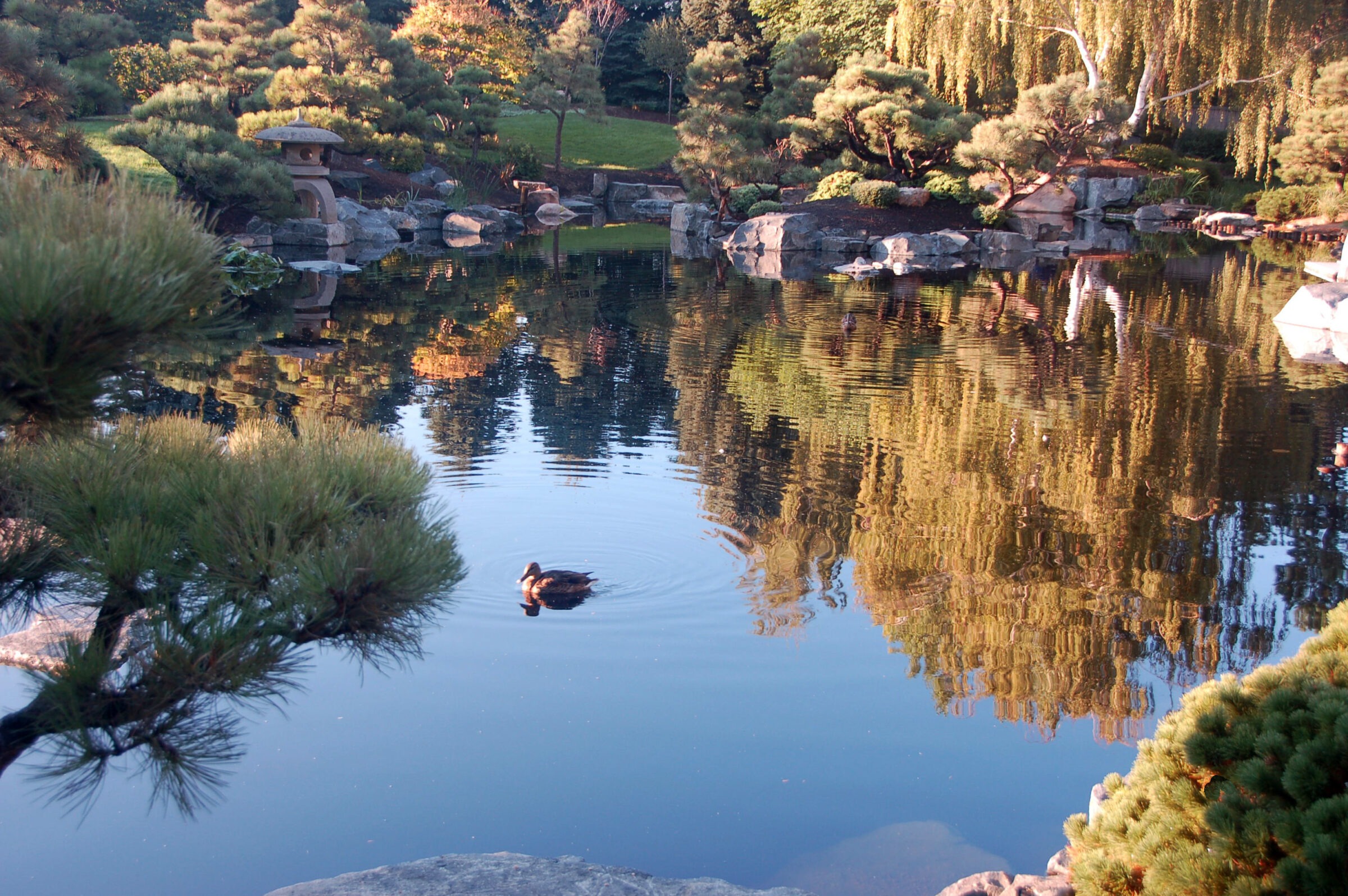
In the spring of 2006, Designs By Sundown was entrusted with a delicate and meaningful project: the complete renovation of the Japanese Garden Pond at the Denver Botanic Gardens. Originally constructed in 1979, the pond had sat nearly empty for two years due to persistent leaks.
The Gardens, known for their global plant collections and serene landscapes, required that the restoration be completed with minimal disruption to the surrounding environment — and within a strict six-week timeline.
Leading the project was then-designer Adam Hallauer, now President of Designs By Sundown. The task began with draining the remaining water, revealing six feet of sludge, debris, and even a few unexpected items like license plates. Hidden somewhere beneath the muck was an eight-inch clay water main that supplied water to the entire Botanic Gardens, adding a layer of complexity to the excavation.
The site was tightly confined, bordered by irreplaceable bonsai trees and frequented by garden visitors. Maneuvering large equipment without disturbing the landscape or the peaceful atmosphere was a challenge throughout the project. All new materials had to be staged within the drained pond itself, and construction progressed in stages, slowly backing out section by section.
But rebuilding the infrastructure was only part of the story. To restore the pond’s spiritual and aesthetic essence, the team collaborated with a fourth-generation Japanese landscape architect from Portland, who flew in regularly to guide the design. Every detail was carefully considered to honor the traditions of Japanese water gardens.
At the center of the pond, Crane Island — also known as Treasure Island — was shaped to resemble a mystical turtle. Carefully selected rocks formed the turtle’s face, legs, and tail, partially exposed for visitors to discover. Treasure Boat Rock, once facing the island, was repositioned to face away, symbolizing a boat returning to shore filled with treasure. Small bogs were added around the pond’s edges to support aquatic plant life while maintaining balance and clarity.
The result was a breathtaking restoration that brought the Japanese Garden Pond back to life. Visitors once again had a tranquil space for quiet reflection, and the Gardens gained a renewed symbol of harmony and craftsmanship.